 Academic Research
Understanding the Difference Between a Thesis and Dissertation
If you have recently started a postgraduate or doctoral programme, you have probably encountered the terms thesis and dissertation. Although these terms are sometimes used interchangeably, their meanings can vary depending on the country, university, and academic programme.
Understanding the difference is important because a thesis and dissertation may involve different objectives, research expectations, levels of originality, and completion timelines.
What Are a Thesis and Dissertation?
Both a thesis and a dissertation are substantial academic research projects. They require students to investigate a focused research problem, evaluate existing literature, apply an appropriate methodology, analyse evidence, and present clear academic conclusions.
The main distinction generally relates to the academic level, research scope, originality, and contribution expected from the study.
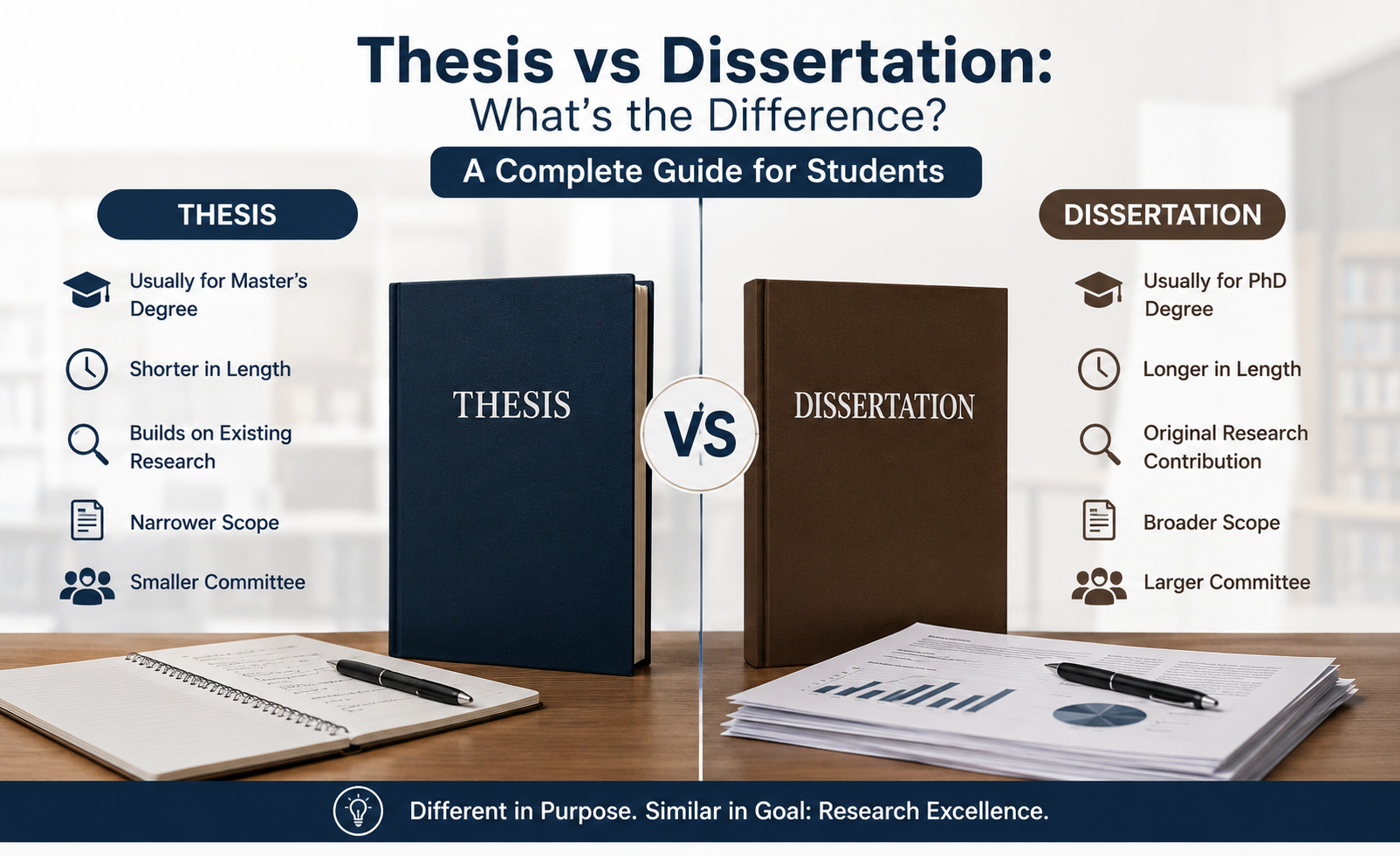
Thesis vs Dissertation: Key Differences
What is a thesis?
A thesis is an academic research document commonly completed as part of a Master’s degree. It demonstrates your understanding of a specific subject and your ability to conduct structured, independent research.
What is a dissertation?
A dissertation is generally associated with a PhD or doctoral programme. It requires extensive independent investigation and is usually expected to make an original contribution to the academic discipline.
Purpose
A thesis demonstrates your ability to understand, evaluate, and apply existing research. A dissertation focuses more strongly on producing original research and contributing new knowledge to the academic community.
Academic level
A thesis is commonly submitted as part of a Master’s programme. A dissertation is generally required for a PhD or another doctoral qualification.
Research scope
A thesis usually addresses a narrower and more focused research question. A dissertation often investigates a broader or more complex research problem requiring greater depth and extensive analysis.
Originality
A thesis may build on existing research and offer a new interpretation, perspective, or application. A dissertation requires a more substantial original contribution that advances knowledge within the chosen field.
Duration
A Master’s thesis may take several months to complete, depending on the programme and university requirements. A doctoral dissertation can require several years of research, analysis, writing, revision, and examination.
Why the Terms Can Be Confusing
Different meanings across countries
In the United States, a thesis is generally associated with a Master’s degree, while a dissertation usually refers to doctoral research.
Different terminology in Europe and Asia
Many European and Asian universities use the term thesis for both Master’s and doctoral research projects. Some institutions may also use dissertation for undergraduate or postgraduate work.
University-specific definitions
Universities may define these terms differently according to their academic traditions, departments, and programme structures.
Different research requirements
Even when two universities use the same term, their expectations regarding length, originality, methodology, and contribution may be different.
Programme-specific guidelines
Your degree handbook may contain specific rules regarding structure, supervision, ethical approval, assessment, and submission. Always review these requirements before beginning your research.
Questions to Ask Before Starting Your Research
Review these essential questions before beginning your thesis or dissertation.
Which qualification am I completing?
Confirm whether your programme requires a Master’s thesis, doctoral dissertation, or another type of academic research project.
How does my university define the project?
Check your official programme handbook because the meanings of thesis and dissertation vary between universities and countries.
What level of originality is expected?
Determine whether your project should apply existing knowledge, offer a new interpretation, or make a substantial original contribution.
Is my research scope realistic?
Choose a research problem that is meaningful but manageable within your available time, word count, resources, and academic deadline.
Can I access the required data or participants?
Confirm that the necessary datasets, documents, organisations, respondents, interview participants, or research materials are accessible.
Is my proposed methodology appropriate?
Select a qualitative, quantitative, or mixed-method approach that can answer your research question effectively.
Have I discussed the requirements with my supervisor?
Your supervisor can clarify the expected scope, methodology, originality, structure, feasibility, and academic contribution.
Conclusion
Both a thesis and a dissertation represent significant academic milestones. A thesis generally demonstrates your ability to conduct independent research at the Master’s level, while a dissertation normally requires a more substantial original contribution at the doctoral level.
However, terminology and expectations vary between countries, universities, and academic programmes. Reviewing your official guidelines and discussing the requirements with your supervisor will help you understand exactly what your institution expects.
A clear understanding of the academic level, research scope, methodology, originality, and submission requirements can make your research journey more focused, manageable, and successful.
“A successful research project begins with a clear understanding of what your university expects and what your study must contribute.”
Need Help with Your Thesis or Dissertation?
Thesis’m supports Master’s and PhD students with topic selection, proposal development, literature reviews, research methodology, editing, proofreading, and publication guidance.
Get Research Guidance